
There is a feeling that is difficult to capture in words. It is not exactly about joy and not exactly about delight. In these moments, it seems to catch your breath, time slows down, and the internal dialogue falls silent for a second. We look at something – and become smaller. But not humiliated, but on the contrary – included in something much larger.
In psychology, this feeling is called awe.
What is awe from a scientific point of view?
In scientific psychology, this is a complex emotion that was first systematically described by psychologists Dutcher Keltner and Jonathan Haidt.
Psychologists describe awe as an emotion that occurs when we encounter something so vast or complex that our usual understanding of the world temporarily fails. It could be the grandeur of nature, music, profound humanity, a scientific idea, or even silence that suddenly seems boundless.
In the scientific model, awe consists of two key components:
- Greatness is something much bigger than us: in scale, depth, or meaning.
- The need for rethinking — our usual mental models are failing, and the brain is forced to update its understanding of the world.
If to say more simply: awe is the moment when the world suddenly becomes bigger than we can immediately explain.
How does awe differ from joy?
Joy is usually focused on “me”: I am good, I am satisfied.
Awe shifts the focus outward. In these moments, there is a feeling of “I am part of something bigger.”
Psychologists also call this the “Small Self” effect: that is, the Ego temporarily decreases, and the feeling of connection with the world, on the contrary, increases. The person does not disappear, but he ceases to be the center of the universe. And in this is a paradoxical relief.
That is, awe is not just a pleasant emotion, here is a visual comparison with pleasant emotions:
| Emotion Focus Sense of | “I” | |
| Personal Joy and satisfaction”I am happy” | ||
| Admiration Object or event “This is beautiful!” | ||
| Awe is something bigger than me”I am part of something much bigger” |
What happens in the brain when we feel fear
Neuropsychological studies show that during fear, the activity of brain areas associated with constant self-reflection, control, and internal monologue decreases. Instead, the work of sensory systems increases.
That is why trepidation is often accompanied by:
- goosebumps,
- a sense of space,
- prolonged holding and slowing of breathing,
- inner silence.
It is not an emotion of excitement. Rather, it is an emotion of expansion.
Examples of situations that cause this effect:
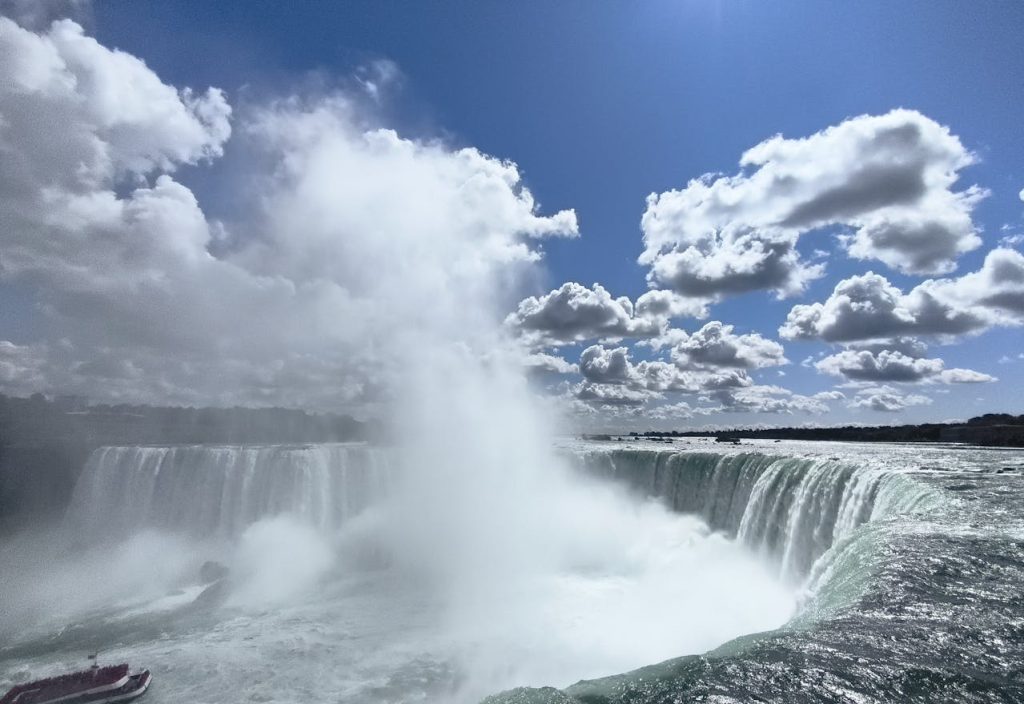
- Contemplation of incredible natural phenomena (mountains, ocean, starry sky)
- Art and music (visiting majestic cathedrals or museums, appreciating masterpieces of art or music)
- Big ideas (science, philosophy, space)
- Moral greatness (heroic acts, deep humanity)
- Spiritual experiences (not necessarily religious)

How common is awe feeling among people?
Although psychologists do not have a single percentage figure, research data shows that awe is not a rare or exotic experience.
In samples of adults, the average level of awe experience is quite high, suggesting that many people experience it repeatedly throughout their lives, and sometimes regularly. This is in good agreement with the intuitive feeling that even if we did not call it “awe,” most people would recognize this state at least once in their lives.
Who feels the thrill more often, and who feels it less often?
The ability and frequency of experiencing awe varies between people, but not because some are “able” and others are “not.”
Awe is more common for:
- people with high openness to new experiences;
- those who are inclined to curiosity and contemplation;
- people for whom meaning, spirituality, or big ideas are important (not necessarily in a religious sense).
More rarely the awe emotion feel those people whose lives are constantly in a mode of control, haste, and functionality, with almost no space for stopping and careful contemplation.
At the same time, it is important to note that there is no scientific evidence that there are people who are completely incapable of feeling awe. It is a universal human emotion, but it can be muted, forgotten, or simply rare in certain life circumstances.
Does awe bring “pleasure”; are there people who start specifically seeking it, and can there be an addiction to awe?
1. Does it bring pleasure? – Yes – but it is not hedonic pleasure.
There is an important distinction in psychology:
- Hedonic — pleasant, comfortable, “feels good” (food, sex, comedy).
- Eudaemonic — a sense of meaning, depth, rightness, “this is more than me.”
Awe belongs to eudaemonic experiences, not to mere pleasure.
That’s why after an awe, people often say not “I had a good time,” but:
- “it was strong”
- “it changed something”
- “I felt something real”
2. Are people starting to seek out this emotion again to feel it more often? – Yes, and creative people are more likely to look for this.
Creative people:
- have higher openness to experience;
- react more acutely to scale, beauty, and symbols;
- more often feel an inner need for meaning, not just comfort.
For them, awe is:
- source of inspiration,
- a way to “restart” perception,
- contact with something greater than everyday functionality.
So, they don’t just want emotions,
but need this state for mental balance.
3. Can there be an addiction to awe? – No.
Key answer:
No, in a clinical sense it cannot.
But there may be a deceptive similarity.
Why is this not addiction? Because: There is no tolerance (you don’t need “more” or “stronger” every time, like with drugs), there is no loss of control (people don’t ruin their lives for the awe), there is no withdrawal (the lack of awe doesn’t cause a physical or mental “breakdown”), there is no dopamine trap (repetition doesn’t work as a quick reward).
The most accurate formulation from psychology:
This is not an addiction, but an orientation towards experiences that expand the self.
There is one moment where a bias can occur — and it’s worth knowing.
If a person:
- avoids reality,
- devalues everyday life,
- lives only in “peaks” (mountains, extremes, major events),
Then it is not an addiction to awe, but an avoidance of ordinary life through the idealization of “higher states.”
It’s not about awe anymore, but about:
- integration difficulties,
- the gap between “everyday life” and “meaning”.
Does awe depend on culture and context?
Yes. Research shows that awe can have different shades in different cultures. Somewhere it is more light and inspiration, somewhere – an admixture of fear or awe. But the very structure of the experience – an encounter with something greater than oneself – remains common.
This once again emphasizes: awe is not a cultural artifact or a buzzword, but a deeply human way of responding to the grandeur of the world.
Why we can consider awe as an important emotion of today. Psychological effects of awe
From the perspective of modern psychology, awe is a counterbalance to chronic stress and narcissistic fatigue.
In a world where:
- attention is constantly fragmented
- “I” is at the center of social networks
- brain overloaded with control
Awe doesn’t just feel beautiful — it changes behavior. Research shows that after experiencing awe, people:
- Become more altruistic
→ help others more often, focus less on themselves - Worry less about small problems
→ problems seem part of a larger context - Feel more purpose in life
→ even a brief experience of awe increases existential satisfaction - Change the perception of time
→ time seems to slow down, a feeling of “sufficiency” appears
Summarizing the awe:
- temporarily turns off overcontrol
- returns a person to the experience of presence
- restores the ability to wonder
- people are less fixated on small problems
- feel more meaningful
- become more attentive to others
This is not an escape from reality. It is a moment when reality becomes broader than our fears, roles, and plans.

In conclusion
We may not consciously seek awe so often, but it comes in those moments when we allow ourselves to look, listen, and be present without immediately trying to explain or use what we see.
And perhaps it is in these moments that we most accurately experience what it means to be human — not only one who leads, but also one who is capable of being silently captivated.


No Responses