Start of the Journey: from Hurghada to Luxor
We left Hurghada very early, before dawn, to avoid the hottest period of the day and make the most of the day at the place. The journey there takes about 4 hours, so by around 8 a.m. we were already near Luxor – the former capital of Ancient Egypt. That day we saw some of the greatest monuments in human history. 🌞
1. Karnak Temple Complex – “The Greatest Sanctuary of Antiquity”
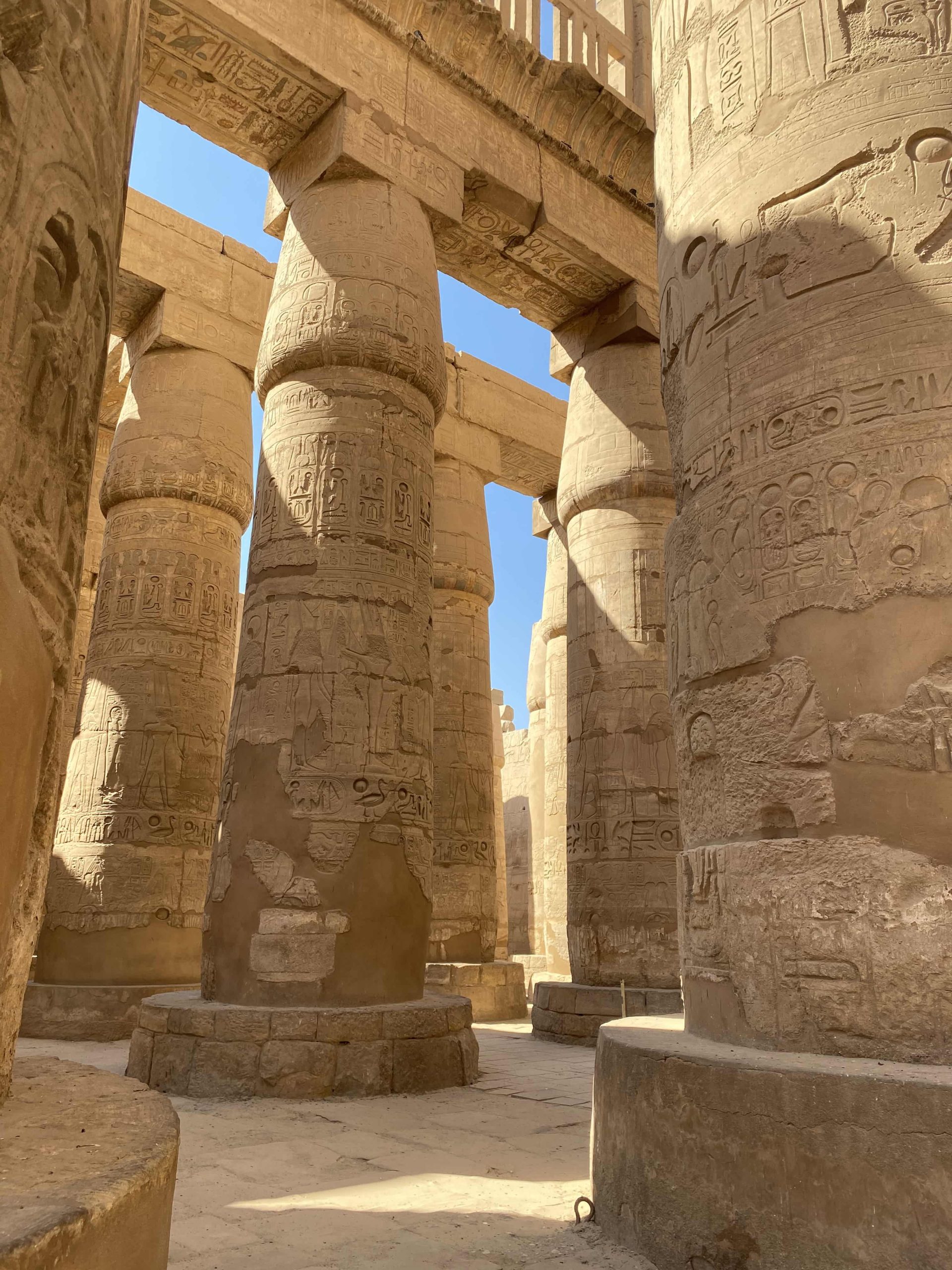
Our first major stop was Karnak, an incredible temple complex that was built over 2,000 years. This place was called Ipet-isut — “the most chosen of places” — because it is here that the magnificent shrines dedicated to the main god of Egypt, Amun-Ra are concentrated.
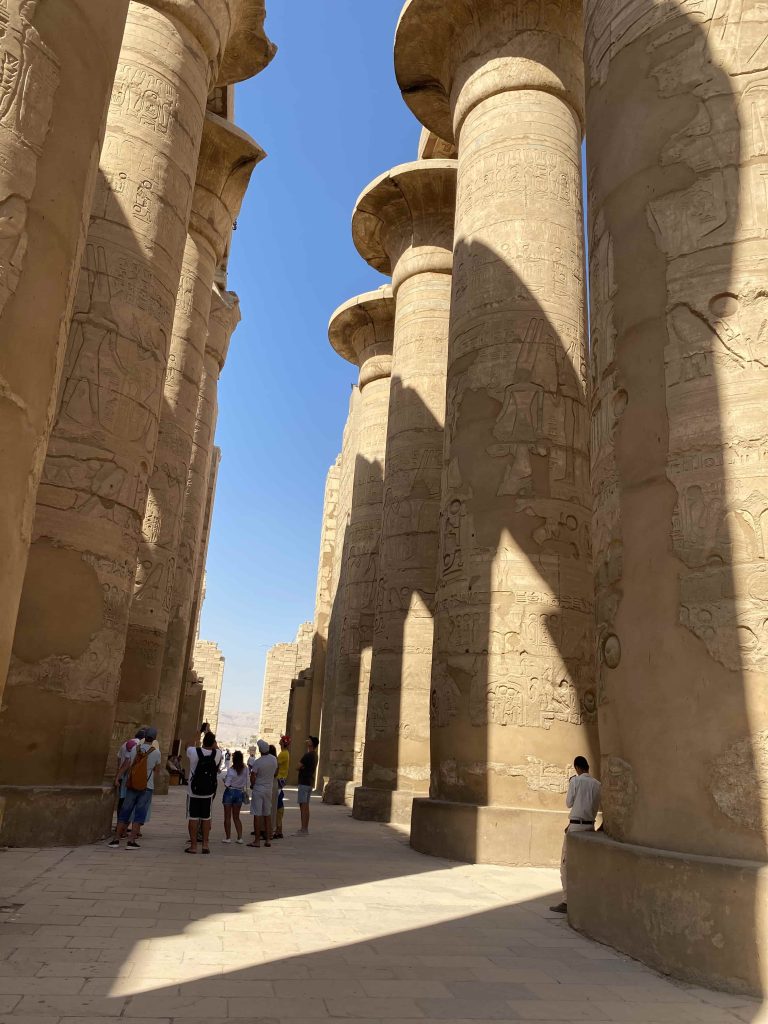
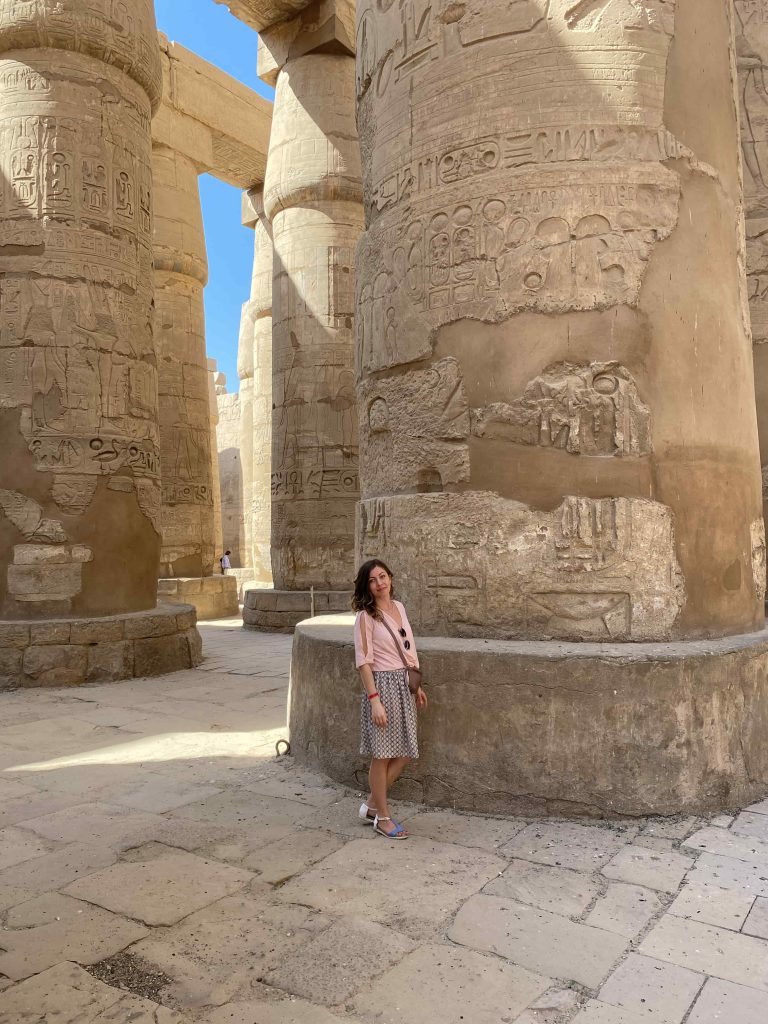
What opens before your eyes when you enter Karnak is like a portal to the past: there are the giant columns of the Hypostyle Hall, among which you feel very small, and each of the 134 columns, over 20 meters high, is impressive in scale and detail.
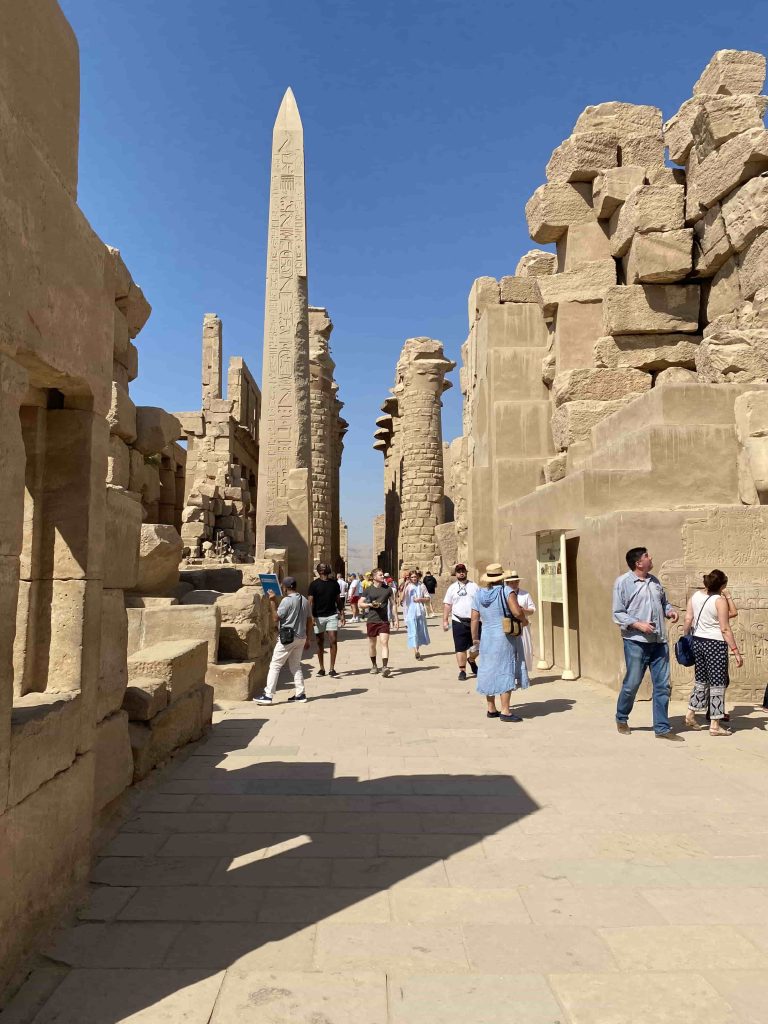
Some of the most impressive structures in the complex are the obelisks erected by various pharaohs. For example, the obelisk of Queen Hatshepsut, which is almost 30 meters high, is one of the tallest of those that have survived to this day. It not only symbolized her power, but also served as a religious sign of worship of the god Amun, consecrating the place of the presence of divine light.
In Karnak you can also see:
- Giant granite statues of pharaohs and images of gods.
- Carved bas-reliefs and hieroglyphs telling about rituals, military victories, and mythological plots.
- Religious paths and places where priests performed purification rites.
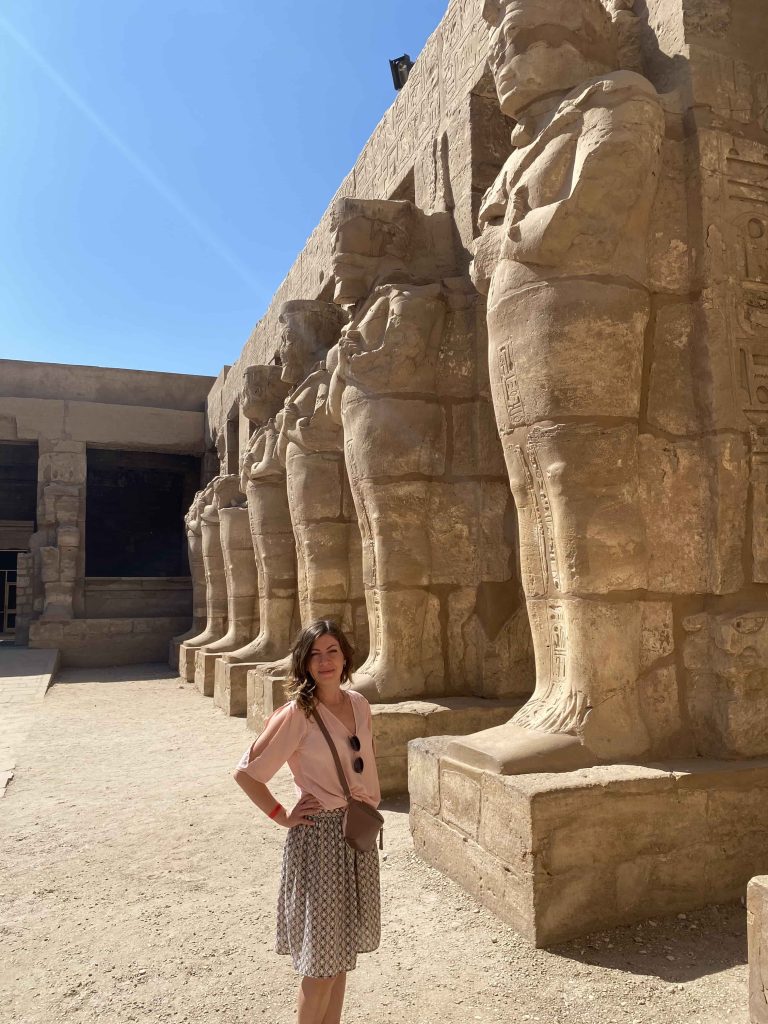
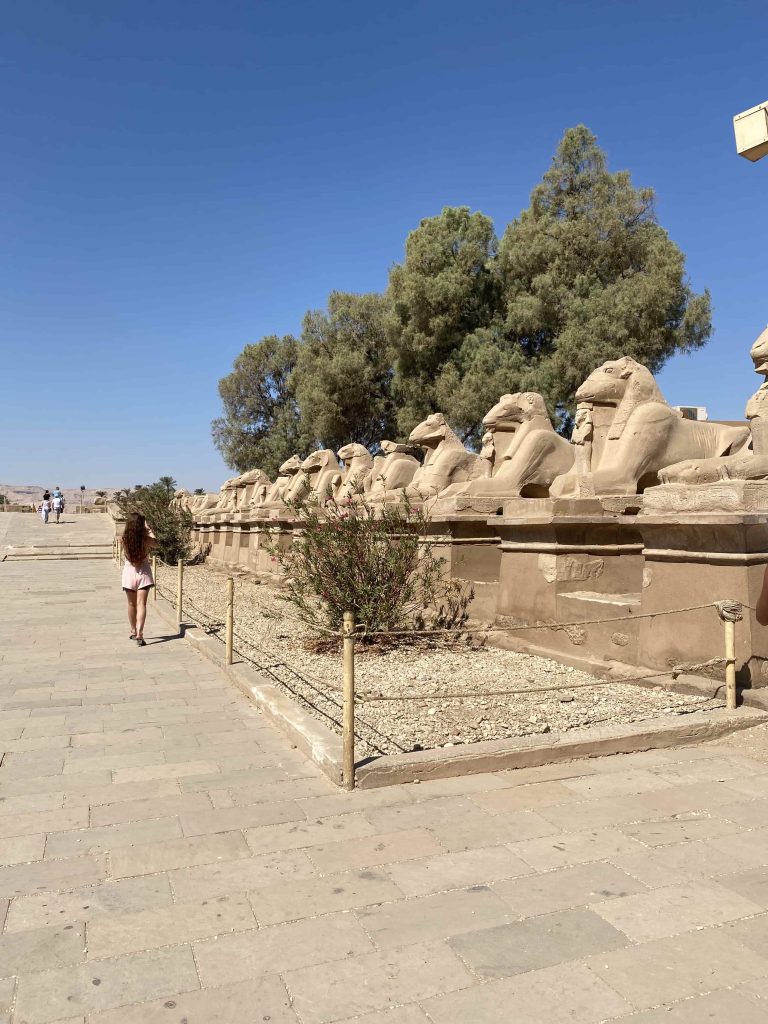
Karnak is not just a temple, it is a whole city of stone and faith, which tells the story of the beliefs and politics of Ancient Egypt. The sights here capture the imagination no less than the most famous Egyptian pyramids.
2. The Colossi of Memnon – majestic guardians of the west bank of the Nile
After Karnak, we headed to the west bank of the Nile to the Colossi of Memnon – two monumental seated statues of Pharaoh Amenhotep III. These statues stood in front of the entrance to his magnificent, but now ruined mortuary temple.
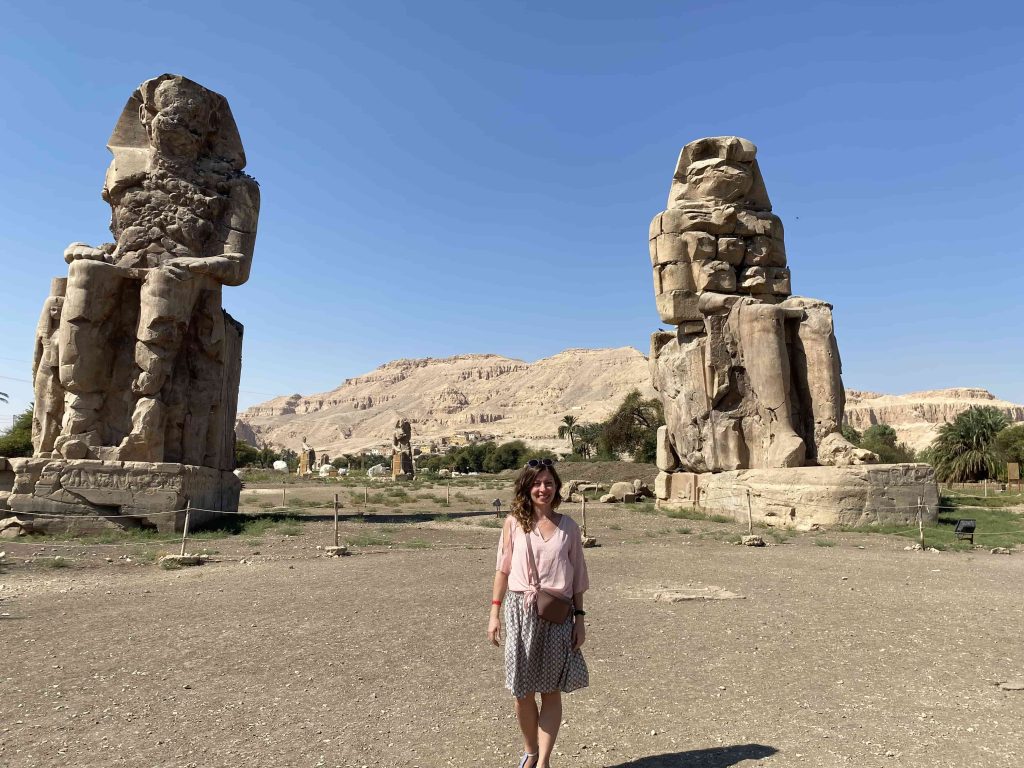
Each statue is about 18-20 meters tall, and together they create the feeling of guarding a space of history and memory. Beyond their scale, they are remarkably well preserved, despite the ages and cataclysms: in ancient times, much of the temple was destroyed, but the colossi remained standing.
3. The Temple of Queen Hatshepsut is an amazing architectural project
Our route continued to the fantastic temple of Queen Hatshepsut, located in Deir el-Bahri – on the west bank of the Nile. This temple is distinguished by the fact that it is literally built into the rock slope – three wide terraces with colonnades rising one above the other.
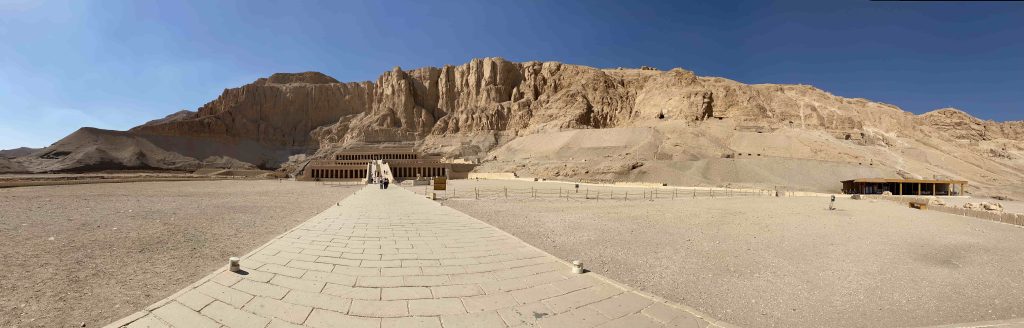
Hatshepsut is one of the few female pharaohs in Egyptian history. To establish herself as a ruler, she had to demonstrate equality with male pharaohs, and so temple images sometimes show her wearing a false beard, a symbol of power.
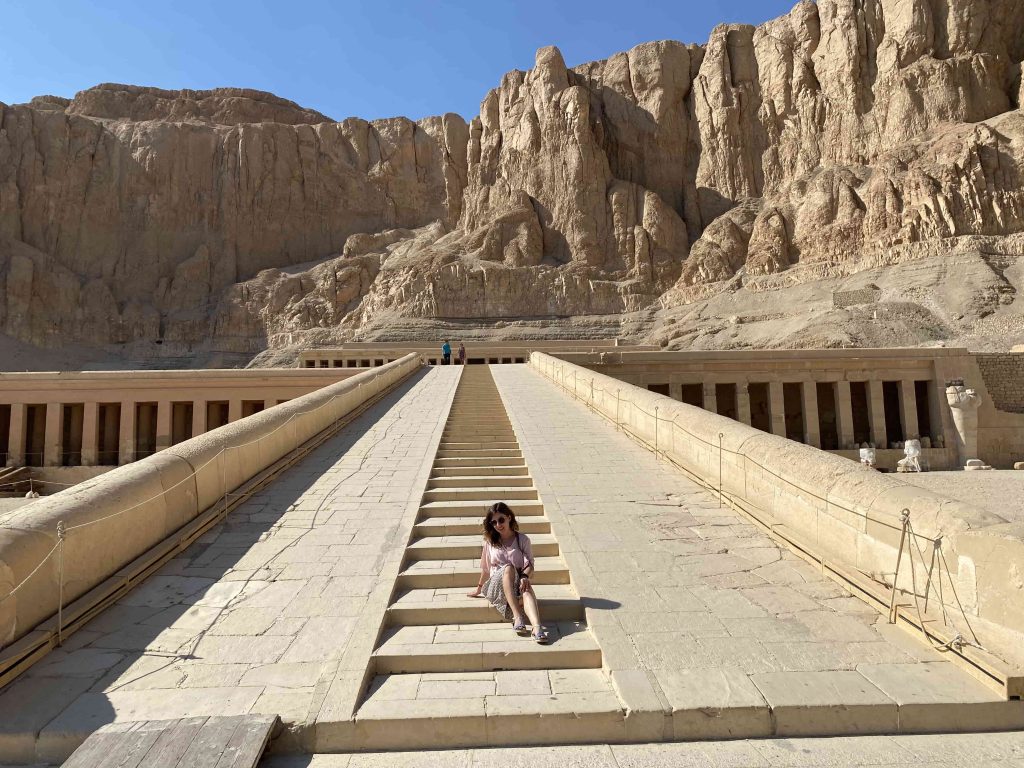
Inside the temple you can see:
- Abundant reliefs about the life of Hatshepsut: her campaigns, construction projects, religious rites.
- Columns and arches that create an impression of majesty and harmony.
- Areas dedicated to the goddess Hathor – the patroness of music, joy and female beauty.
This temple is not only a historical monument, but also a symbol of courage, boldness and artistic genius, created to inspire future generations.
4. Valley of the Kings – tombs of the pharaohs of the New Kingdom
After Hatshepsut, we headed to the Valley of the Kings, the burial place of the most powerful rulers of the New Kingdom. It is a mountainous valley located on the west bank of the Nile, where intricate tombs with colorful frescoes and mythological scenes are carved underground.
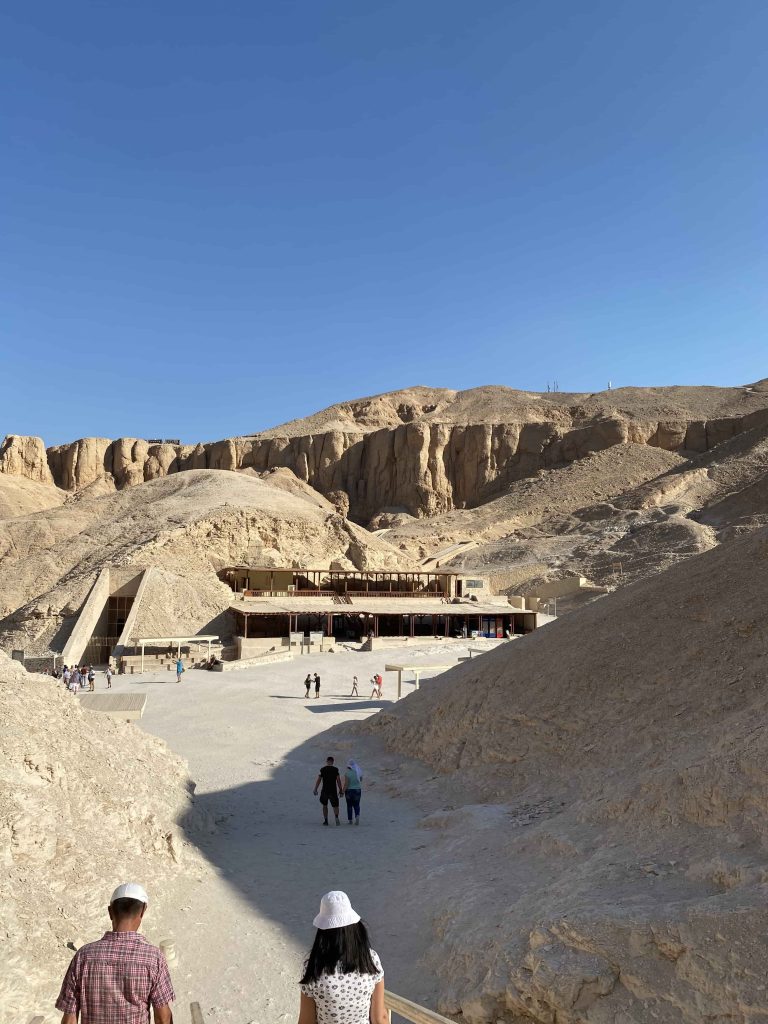
There are over 60 tombs, among which the most famous are:
- The tomb of Tutankhamun (KV62) is the most famous, opened in 1922 with all its treasures.
- The tombs of Seti I and Ramses III are majestic, with deeply symbolic paintings.
- Many other burials of high-ranking figures of the New Kingdom.
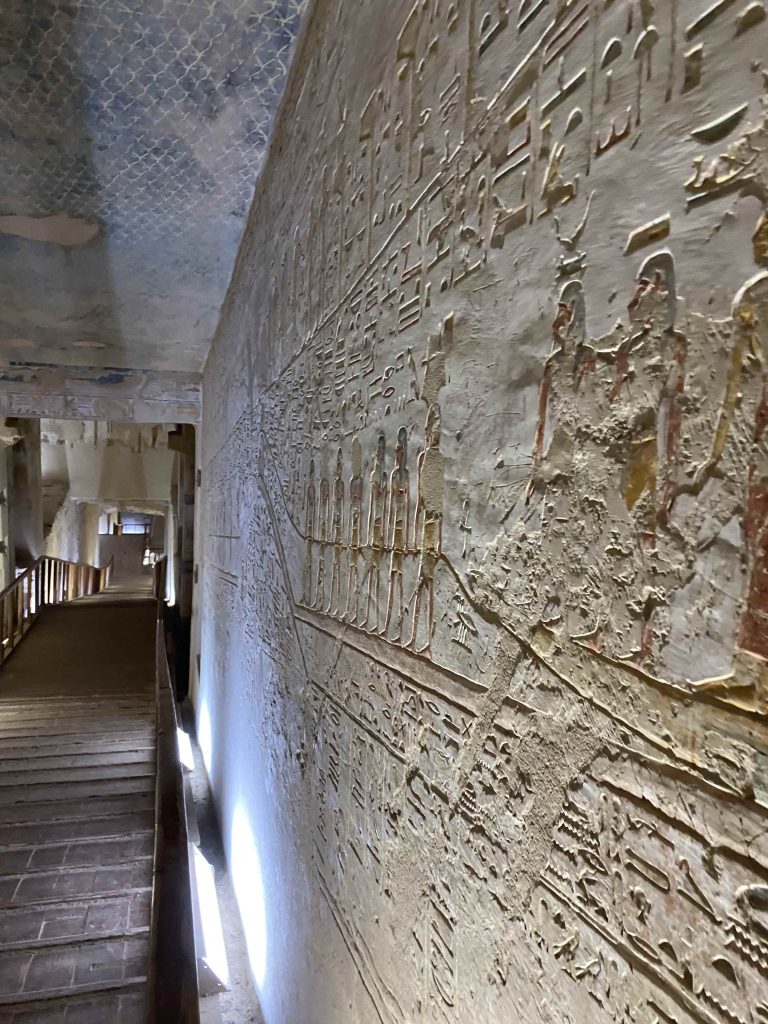
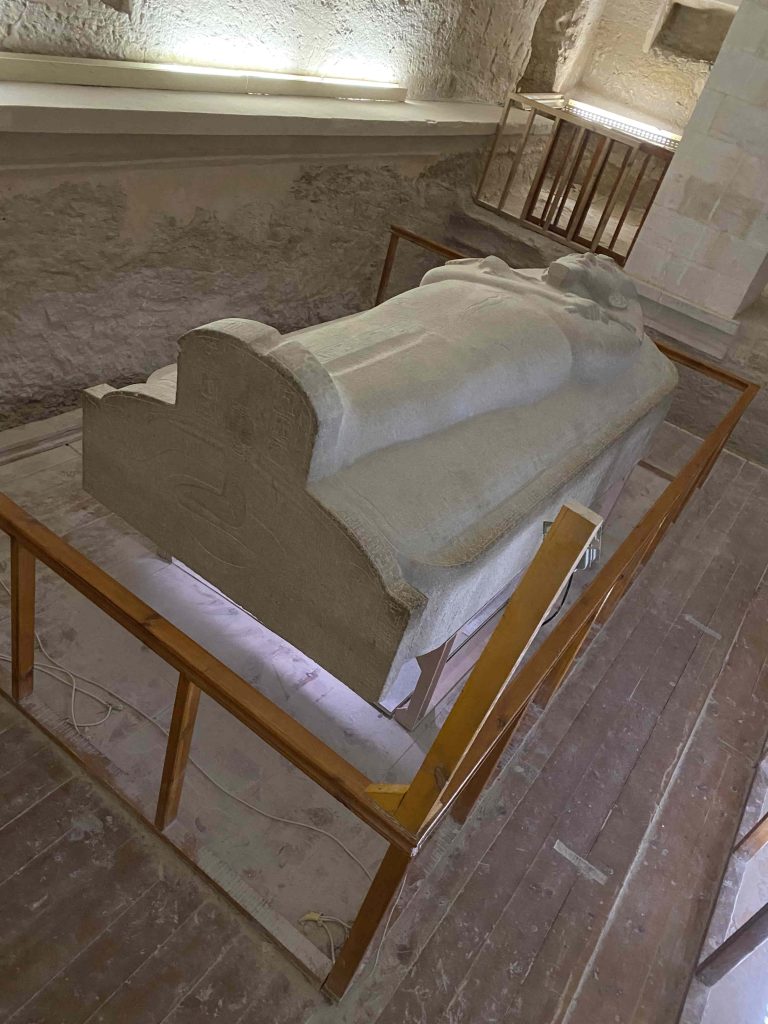
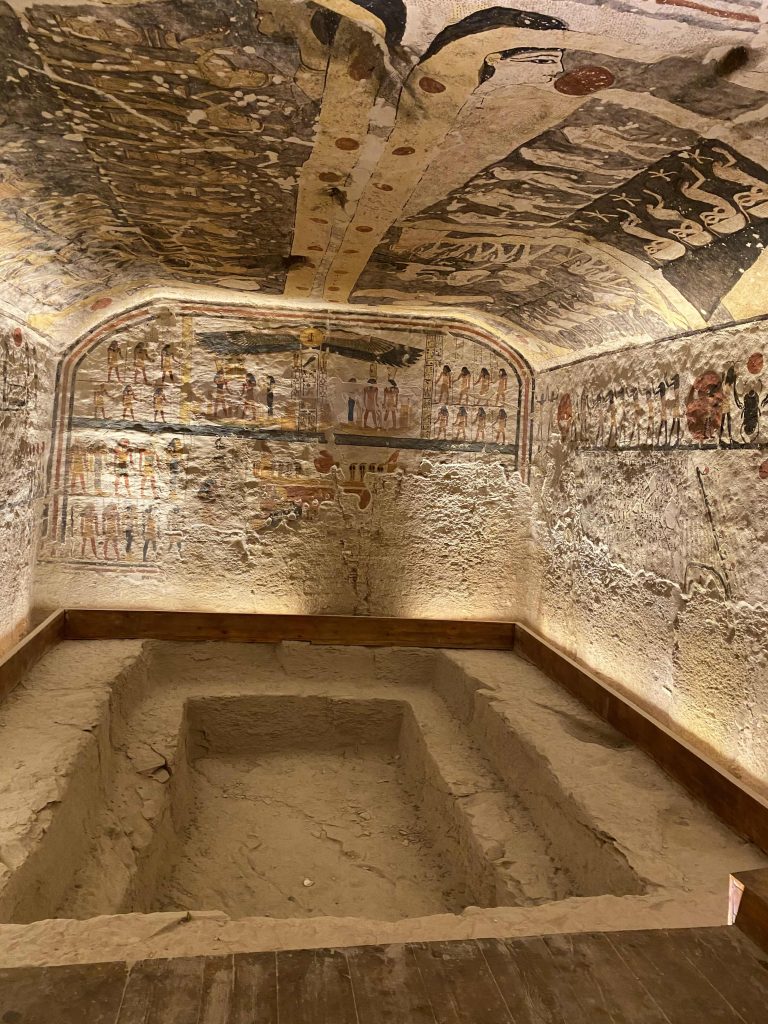
The reliefs and drawings on the walls tell of the afterlife, the soul’s journey through the underworld, and the gods the pharaohs asked for protection. It is here that we see how strongly the ancient Egyptians believed in the afterlife and the magical power of symbols.
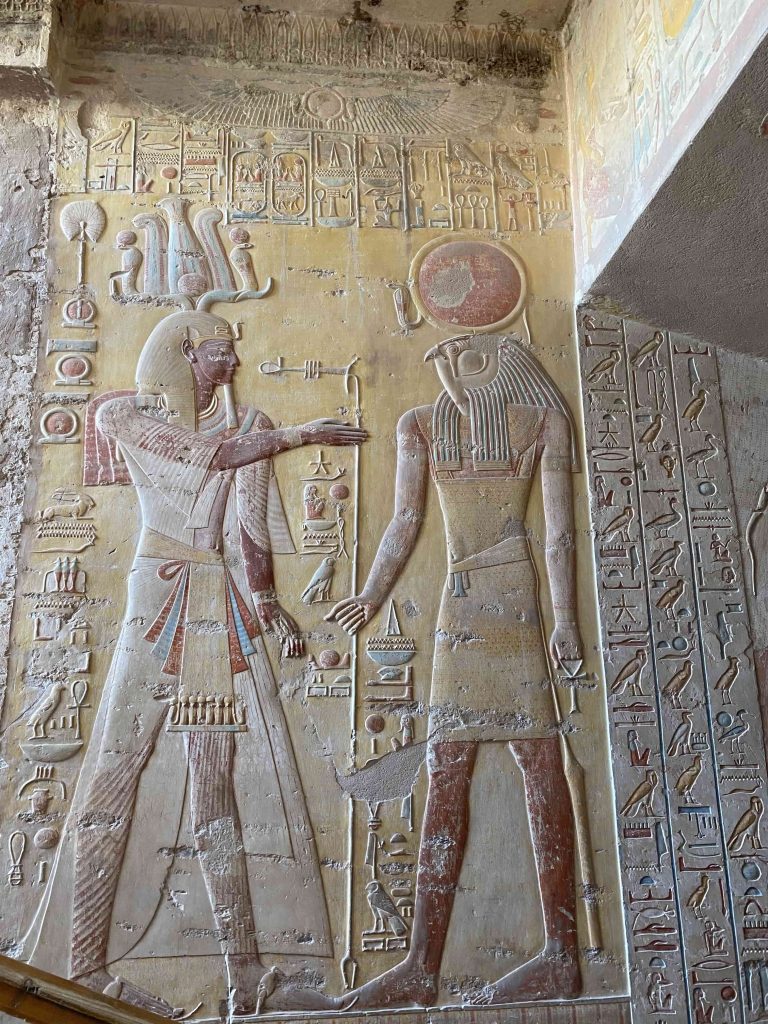
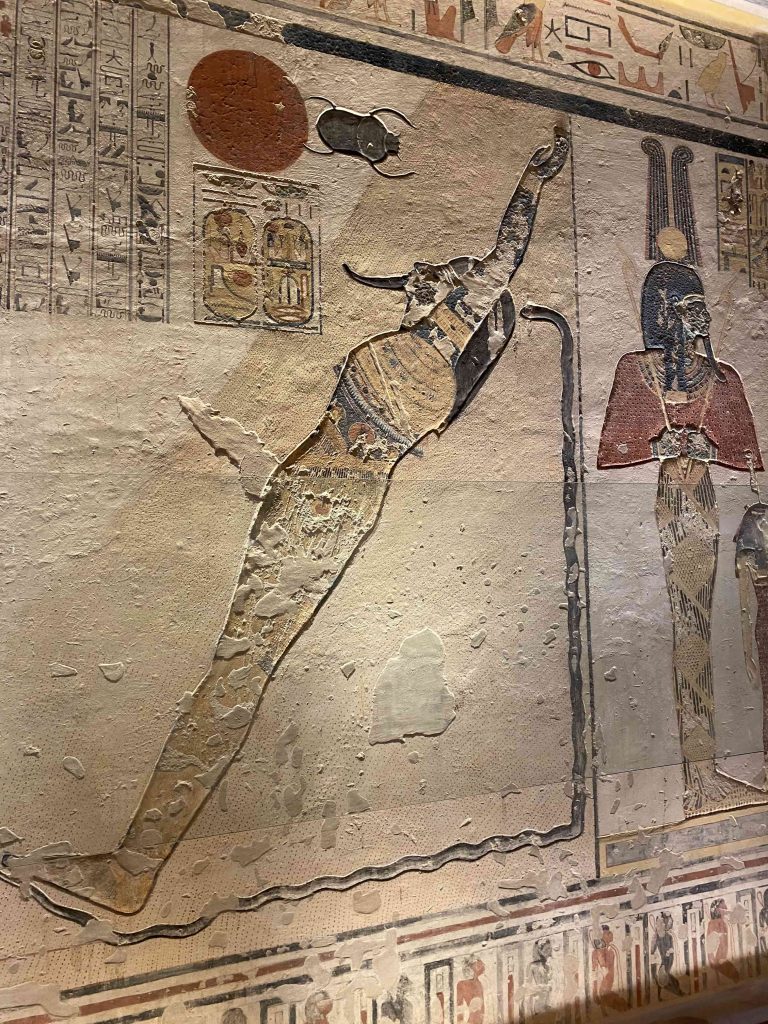
Why are these symbols so important?
One of the most valuable things about this journey is not just the scale of the temples and tombs, but also the language of symbols that Ancient Egypt literally spoke from its walls. These signs were not just decorations on stone. They were part of a worldview, a belief system that explained life, death, and the journey of the soul after death. Thanks to the guide’s explanations, we looked at the temples and tombs no longer as ruins, but as living texts that could be read if you knew the language of symbols.
Symbols of Ancient Egypt that we saw with our own eyes:
The scarab is a symbol of rebirth and eternal life
In Karnak, we were shown images of the scarab, a sacred beetle that the Egyptians considered as a symbol of rebirth, the movement of the sun and the immortality of the soul. They believed that just as a beetle rolls a ball, the Sun god Ra rolled the sun across the sky every day.
The scarab was so important that it was carved on amulets, seals and even placed in tombs to help the pharaoh’s soul be reborn in the afterlife.
The Eye of Horus – Protection, Strength and Healing
Another symbol that was often found in temples and tombs was the Eye of Horus. This is a sign of divine protection, integrity and health.
According to legend, the god Horus lost his eye in the fight against evil, but it was restored – that is why the symbol means restoration after loss. It is not surprising that this sign was so often depicted in the tombs of the pharaohs: it was supposed to protect the soul on the path to eternity.
Ankh – the key to life
On the walls of temples we have repeatedly seen a cross with a loop at the top – ankh. It is one of the most famous Egyptian symbols, signifying life, eternity, and divine energy.
The gods often hold the ankh in their hands or raise it to the pharaoh’s lips – as a sign that it is they who grant him life and the right to rule.
5. Nile Cruise and Banana Grove
After a day full of history, we relaxed a bit by going on a boat trip on the Nile. The water, green banks and silence contrasted with the grandeur of the ancient stones – it was time to experience Egypt now, in everyday life.
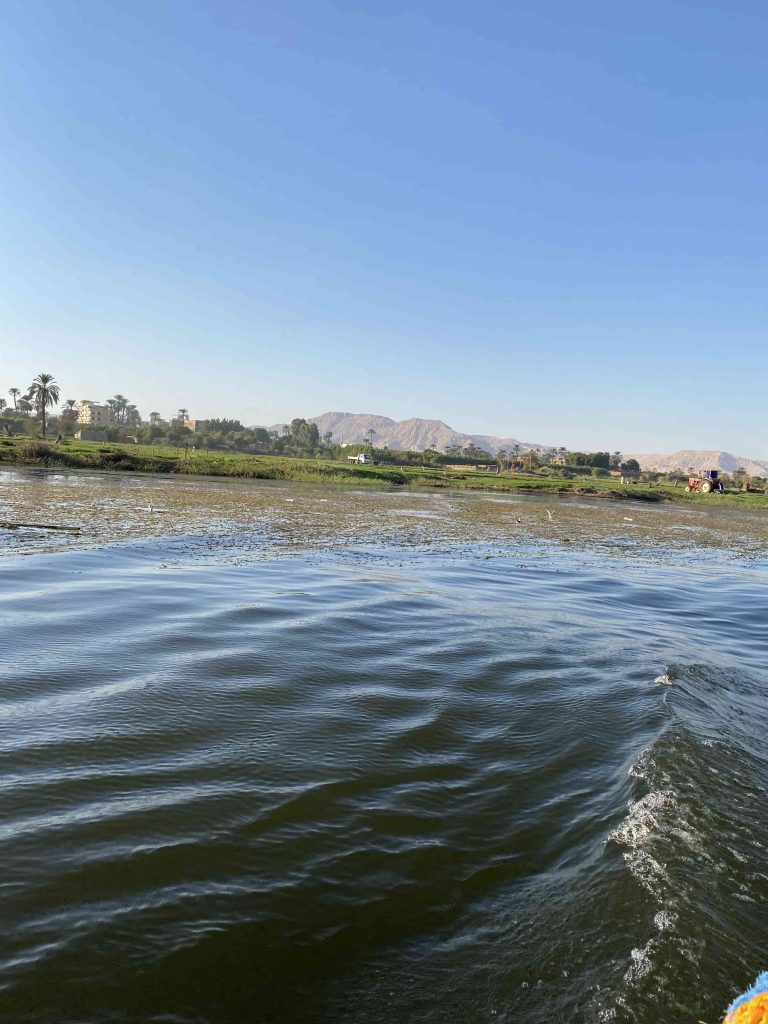
Then we stopped at the quiet green banana groves.
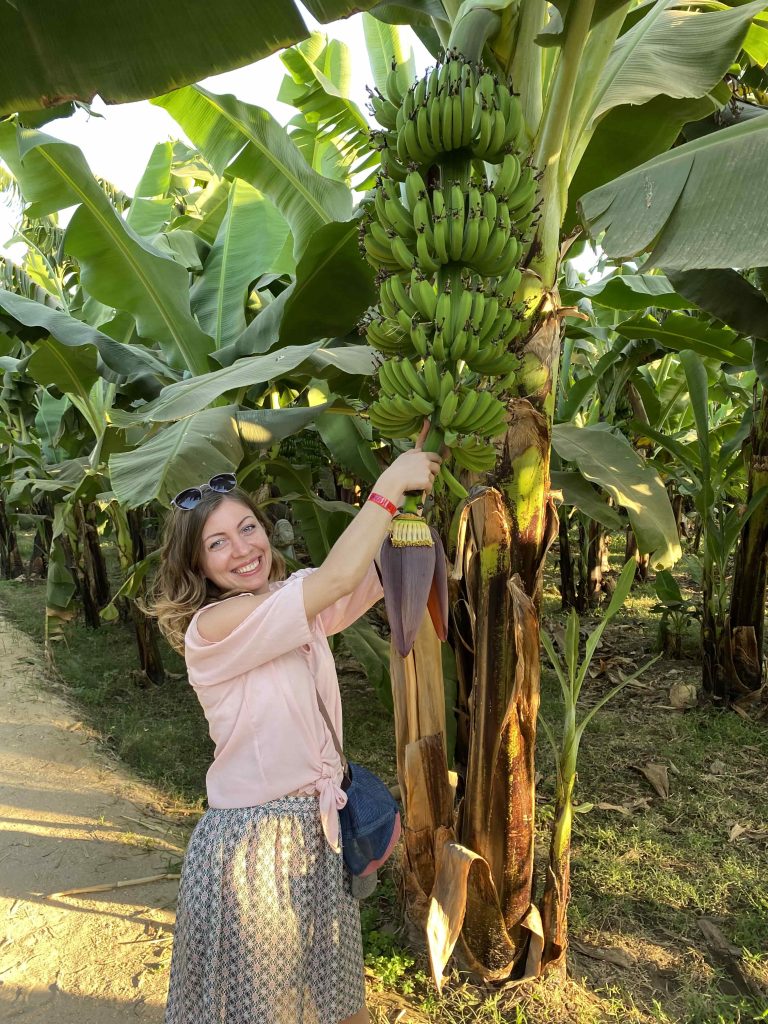
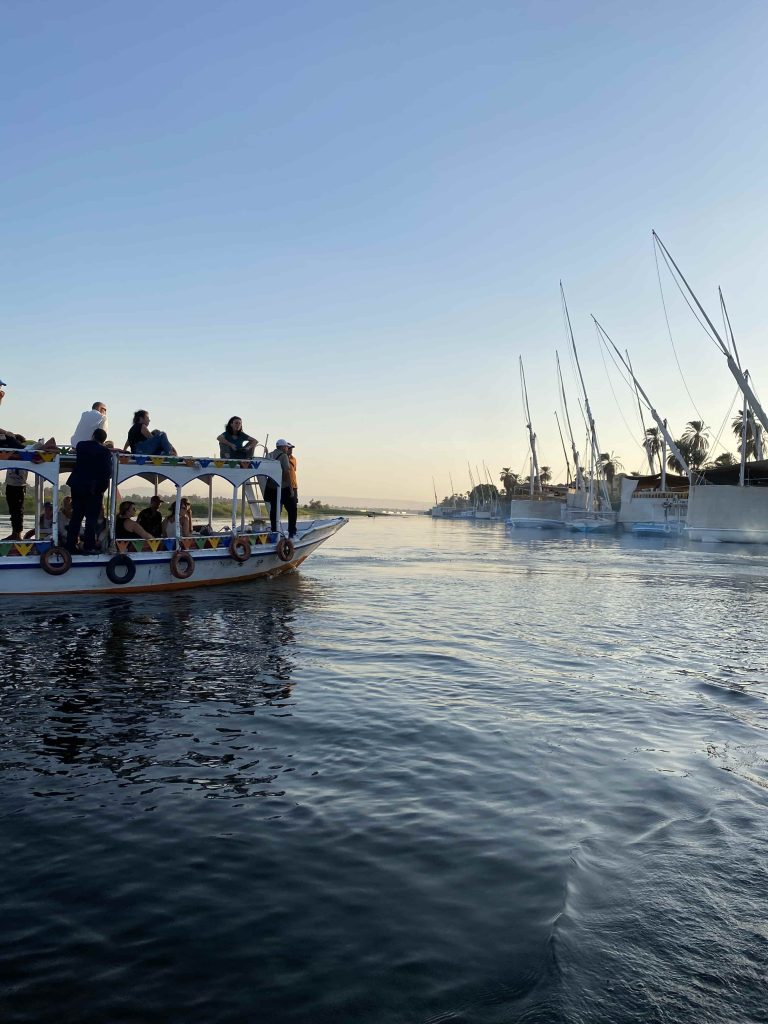
Although I don’t remember the exact location, such plantations usually grow along the Nile in the Luxor area and on the way to Cairo, where canals feed the fertile lands. It was a pleasant green oasis among the desert landscapes.
Return to Hurghada
After a busy, emotional, educational day, we got back on the bus and slowly returned to Hurghada. The road took the same approximately 4 hours, but now we were driving full of impressions and new knowledge, with pleasant fatigue and a desire to return here again.
Impressions that will remain in memory forever
This route combined the grandeur of ancient monuments, human history, religious beliefs of Ancient Egypt and the modern beauty of the Nile. Our guide didn’t just show us places – he talked about myths, symbols, the meaning of each sign and ritual, and this turned the trip into a real immersion in the culture and history of one of th most vivid civilizations of mankind.


No Responses